
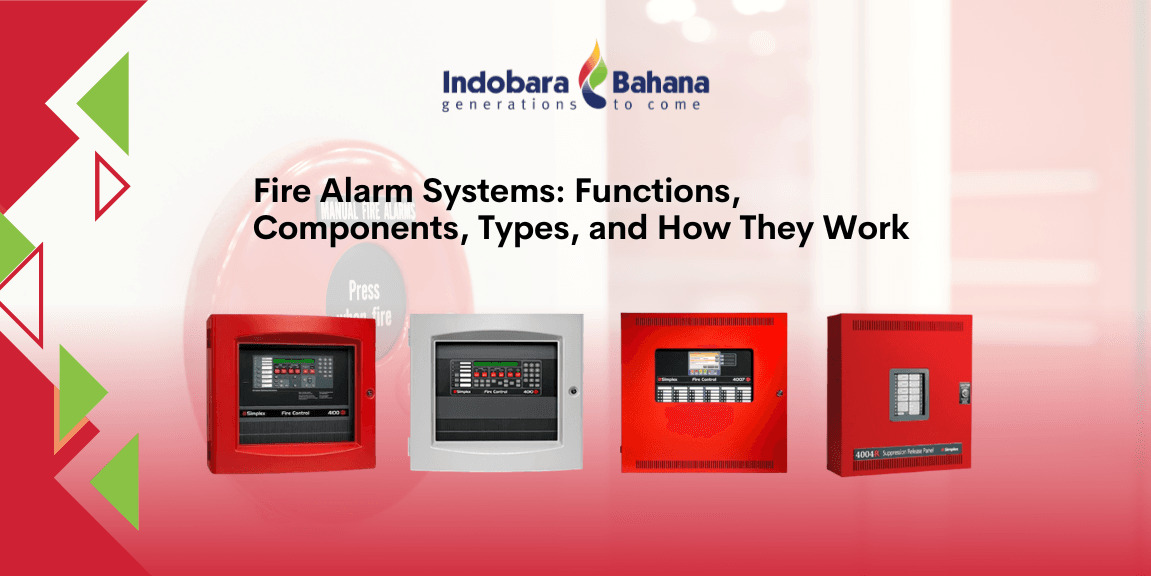
A fire alarm system is an essential part of building safety because it helps detect early signs of fire and alerts occupants before the situation becomes more dangerous. Smoke or a rise in temperature may appear before flames are visible, allowing occupants and emergency personnel to respond more quickly.
A fire alarm is not simply a device that produces a warning sound. It is an integrated system consisting of detectors, manual call points, a fire alarm control panel, notification appliances, and power supplies that work together to detect and communicate emergency conditions.
Understanding how a fire alarm system works and the different types available is important for building owners, facility managers, contractors, and safety teams. With the right knowledge, they can select a system that matches the size, function, risk level, and operational requirements of the building.
A fire alarm system is designed to detect signs of fire, process the information received from connected devices, and warn people inside the building. The system may detect several fire-related conditions, including:
When one of these conditions is detected, a signal is sent to the main control panel. The panel processes the information and activates notification appliances such as alarm bells, horns, speakers, or strobe lights. It is important to understand that a fire alarm system does not normally extinguish a fire. Its primary function is to provide an early warning so occupants can evacuate and emergency personnel can respond. Fire suppression systems are usually separate, although they can be integrated with the alarm system when required.
The main function of a fire alarm system is to provide an early warning. This warning gives building occupants more time to evacuate before conditions become increasingly hazardous. Modern fire detection systems can also perform several additional functions. Depending on the system design, they can identify the location of an alarm, display system conditions such as alarm, trouble, and supervisory status, and help emergency personnel investigate the affected area more efficiently.
Addressable systems can provide more specific information by identifying the individual device that has been activated. This can reduce the time required to locate the source of an alarm or system fault.
A fire alarm system may also be integrated with other building systems, including:
This integration allows the building to provide a more coordinated response during an emergency. However, the available functions depend on the control panel, connected devices, system configuration, and project requirements.
The operation of a fire alarm system can be understood through four main stages: input, processing, notification, and response.
The process begins when an initiating device detects a particular condition. A smoke detector may detect smoke particles, a heat detector may respond to temperature changes, or a person may activate a manual call point after discovering a fire.
The signal from the initiating device is sent to the main control panel. The panel evaluates the signal and determines whether it represents an alarm, trouble, supervisory, or normal condition.
When an alarm condition is confirmed, the panel activates notification appliances such as bells, horns, speakers, or strobe lights.
After the alarm is activated, occupants and emergency personnel can take appropriate action, such as evacuating the building, checking the affected area, or beginning emergency procedures.
The basic operating sequence is:
Detector or Manual Call Point → Control Panel → Notification → Response
A fire alarm system consists of several components that perform different functions. The exact configuration may vary depending on the building and the type of system installed.
The fire alarm control panel is the central control unit of the system. It receives signals from detectors, manual call points, modules, and other connected devices. The panel processes these signals, displays the system status, and activates the required outputs. Depending on the system, it may also store event history, provide diagnostic information, and control integrated building equipment.
Fire detectors act as the sensing devices of the system. Common types include:
The correct detector should be selected according to the environmental conditions and the expected fire risk in each area.
A manual call point allows an occupant to activate the alarm manually after discovering a fire or other emergency. These devices are normally installed in visible and accessible locations so they can be reached quickly when needed.
Notification appliances warn building occupants through audible or visual signals. Audible devices include bells, horns, sounders, and speakers. Visual notification is usually provided by strobe lights.
The type and placement of notification appliances should be determined according to the building layout, ambient noise level, occupancy, and applicable project requirements.
Modules allow the control panel to monitor or control other devices and systems. In an addressable fire alarm system, each module or connected device can have an individual address. This allows the control panel to display its identity, programmed location, and operating status.
Modules may be used to monitor conventional circuits, sprinkler waterflow switches, valve supervisory switches, and other external equipment. They may also be used to control fans, dampers, doors, or other building systems, depending on the system design.
A fire alarm system requires a primary electrical supply and backup batteries. The backup power source allows the system to continue operating when the main electrical supply is interrupted. Battery capacity must be calculated according to the system load, standby period, alarm operation, and applicable requirements.
Different areas have different environmental conditions and fire risks. For this reason, one detector type should not be used automatically throughout an entire building.
A smoke detector is designed to detect smoke particles in the surrounding air. It is commonly used in offices, commercial spaces, corridors, and other relatively clean environments. Its placement should consider air movement, ceiling conditions, ventilation, dust, and sources of steam that may affect detector performance.
A heat detector responds to temperature conditions. Some models activate when the temperature reaches a fixed threshold, while rate-of-rise detectors respond to a rapid increase in temperature.
Heat detectors may be suitable for areas where smoke detectors are less appropriate. However, their use should still be based on the expected fire characteristics and environmental conditions.
A flame detector detects radiation produced by an open flame. This type of detector is typically used in industrial or high-risk areas where combustible liquids, fuels, or other materials may produce a rapidly developing flame.
Its effectiveness depends on factors such as detection range, field of view, environmental conditions, and possible sources of interference.
A multi-sensor detector combines more than one sensing technology in a single device. For example, it may combine smoke and heat detection so the control panel can evaluate multiple conditions. This can provide more comprehensive information, although the detector must still be selected according to the requirements of the area.
Fire alarm systems can generally be divided into conventional, addressable, analogue addressable, and hybrid systems.
A conventional system divides the building into zones. When an alarm is activated, the control panel identifies the affected zone rather than the individual device. Emergency personnel must then inspect the devices and areas included within that zone.
This type of system may be suitable for smaller or less complex buildings. However, the larger the zone, the more area must be inspected when an alarm or fault occurs.
In an addressable system, each detector, module, or manual call point has an individual address. The control panel can display the specific device that has been activated and its programmed location. This allows alarm investigation, troubleshooting, and maintenance to be performed more efficiently.
Addressable systems are often selected for larger buildings, multi-storey facilities, and projects requiring greater flexibility or integration.
An analogue addressable system does more than identify the address of a device. Sensors send condition data to the control panel for evaluation. For example, a smoke sensor may send information related to the smoke level inside its chamber. The panel evaluates this data according to programmed sensitivity and operating parameters.
Depending on the product and configuration, this approach may support sensitivity adjustment, maintenance alerts, environmental compensation, and advanced monitoring.
A hybrid system combines addressable devices with conventional circuits or initiating devices. This approach may be useful for retrofit or expansion projects where part of an existing installation is still suitable for use.
However, existing wiring and devices should not automatically be assumed compatible. The cable condition, circuit design, end-of-line resistors, devices, modules, and control panel requirements must be reviewed before the system is reused.
| Aspect | Conventional System | Addressable System |
|---|---|---|
| Alarm identification | By zone | By individual device |
| Location information | General area | Specific programmed location |
| Troubleshooting | Requires inspection of the affected zone | More focused on the identified device |
| Flexibility | More limited | Greater flexibility |
| Initial cost | Generally lower | Generally higher |
| Typical application | Smaller or simpler buildings | Medium, large, or complex buildings |
An addressable system offers more detailed information, but that does not mean a conventional system is always the wrong choice. The most appropriate system depends on the size of the building, level of risk, operational requirements, maintenance needs, integration, and budget.
Selecting a fire alarm system should begin with an assessment of the building and its risks, not simply with a preferred control panel model.
Several factors should be considered:
A small building with a simple layout may have different requirements from a hospital, shopping centre, industrial facility, warehouse, data centre, or multi-building complex. The selected system should provide adequate detection, clear notification, practical maintenance, and sufficient flexibility for the building’s current and future needs.
In Indonesia, one of the references for fire detection and alarm systems is SNI 03-3985-2000, which covers the planning, installation, and testing of fire detection and alarm systems in buildings. NFPA 72 may also be used as a reference for fire alarm, signalling, and emergency communication systems, depending on the project requirements.
Additional requirements may be specified by consultants, building owners, insurers, government authorities, or the authority having jurisdiction. Compliance does not depend only on selecting certified equipment. System design, detector placement, installation, programming, testing, commissioning, inspection, and maintenance must also be carried out correctly.
PT Indobara Bahana provides Simplex fire alarm solutions from Johnson Controls for various building and facility requirements. The available product range includes fire alarm control panels, addressable detectors, notification appliances, monitoring and control modules, graphical workstations, commissioning tools, and dedicated panels for fire suppression applications.
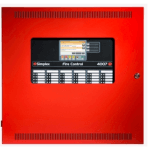
The Simplex 4007ES is designed for small to medium-sized buildings with a capacity of up to 250 points. It features a 4.3-inch colour touchscreen and supports TrueAlert ES addressable notification technology. The hybrid version can work with both addressable and conventional initiating devices, making it suitable for retrofit and expansion projects that may reuse part of an existing installation.
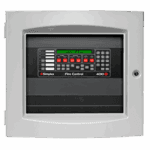
The Simplex 4010ES is an addressable fire detection and control unit for mid-range applications. Depending on the configuration, it can support up to 998 IDNet addressable points or up to 1,000 MX Loop points. Its modular design supports both standalone and networked operation, with additional modules available for monitoring, control, communication, and system integration.
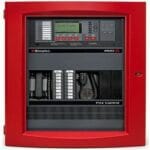
The Simplex 4100ES is a fire and life-safety platform for large buildings, high device counts, and complex fire alarm networks. It supports standalone and networked operation and includes features such as data storage, Install Mode, remote downloads, and flexible system configuration. It can be adapted to meet the operational and expansion requirements of large facilities.
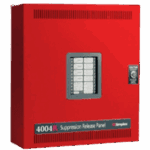
The Simplex 4004R is designed specifically for controlling automatic fire suppression systems. It can be used for extinguishing agent release, deluge systems, and preaction sprinkler systems. The panel supports single- or dual-hazard protection and can be configured for cross-zoned operation or activation from a single detection input.
It also provides dedicated circuits for initiating devices, notification appliances, releasing appliances, and special-purpose monitoring functions required in suppression applications.
Simplex fire alarm systems can also be supported by several related technologies:
PT Indobara Bahana provides Simplex fire alarm solutions tailored to your building needs. We assist from consultation to system selection, ensuring the right panel and devices are used based on your project requirements.
With a range of options such as the 4007ES, 4010ES, 4100ES, and 4004R Suppression Panel, along with supporting technologies like TrueAlarm and TrueAlert, we help deliver reliable and efficient fire protection systems.
Still unsure which panel and devices are right for your project? Contact us via WhatsApp for a consultation and a Simplex Fire Alarm recommendation based on your building and system requirements.

Ebara Pump Spare Parts and Ebara Pump Service at Indobara
Indobara provides two main solutions for maintaining Ebara pumps: Ebara pump spare parts and Ebara pump service. These services can be used separately or together, depending on the condition of the pump and the customer’s requirements. If you already know which component needs to be replaced, you can order the required spare part directly. However, […]
See Details
Water Leak Detection: Types of Equipment and How to Detect Water Pipe Leaks
Water leak detection helps locate leaks in piping systems that are difficult to identify visually, especially in underground pipes, concealed areas, or extensive water networks. With the right method and equipment, leak locations can be investigated more accurately before repair work begins. Choosing the right water leak detector is equally important because every piping system […]
See Details
FM-200 Fire Suppression System: Functions, How It Works, and Components
The FM-200 Fire Suppression System is a clean agent solution used to protect electronic equipment and high-value assets. In server rooms, communication centers, or control rooms, choosing the right extinguishing agent is important because particles and oily deposits can increase cleanup requirements and interfere with the protected equipment. This system uses a gaseous clean agent […]
See DetailsNeed the right engineering solution for your project? Our expert team is ready to provide insights and the best recommendations. Send us your questions, and we’ll get back to you soon.


