
Water leak detection helps locate leaks in piping systems that are difficult to identify visually, especially in underground pipes, concealed areas, or extensive water networks. With the right method and equipment, leak locations can be investigated more accurately before repair work begins.
Choosing the right water leak detector is equally important because every piping system has different conditions. Pipe material, background noise, network size, and the inspection method can all influence which type of leak detection equipment is most suitable.
Water leak detection is the process of detecting and helping locate leaks within water piping systems. When a leak occurs, escaping water may produce sound or vibration. These signals can then be detected using specialized equipment to help operators identify areas that require further inspection.
This method is particularly useful when the leak location is not visible from the surface. In underground piping systems, for example, the point where water appears above ground may not be the actual location of the damaged pipe.
By carrying out a leak detection survey first, operators can narrow down the search area and avoid relying solely on assumptions about where the damage may be located.
When pressurized water escapes through a damaged section of pipe, it can generate sound and vibration that travel through the pipe material and surrounding area. A water leak detector is used to capture or analyze these signals. Depending on the application, the method may involve acoustic listening, sound-level measurement, noise filtering, or leak noise correlation.
With acoustic listening, the operator listens for leak sounds at specific points along the piping system. Correlation methods, on the other hand, analyze sound signals collected from multiple points to help estimate the location of a leak. Not every piping system requires the same detection method. Pipe material, site conditions, background noise, and network size should all be considered before selecting the appropriate equipment.
Fujitecom offers several devices with different functions for water leak detection applications. The appropriate equipment can be selected based on the condition of the piping system and the type of inspection required.
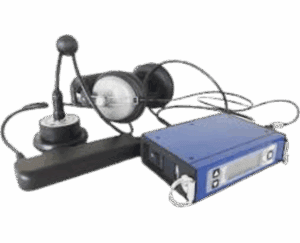
Fujitecom LDR-20 is a water leak detector designed to listen for leak sounds and assist operators in identifying leak points. The LDR-20 offers approximately 7.5 times higher sensitivity than conventional devices. It also provides various filter settings to help operators handle different leak sound characteristics during an inspection.
Its compact and lightweight design helps reduce operator fatigue during extended leak detection work. The LDR-20 can also be connected to an Android application. Through the app, listening data can be recorded, inspection locations can be displayed on a map, and sound-level information can be used for reporting and documentation.
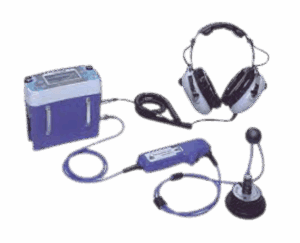
Detecting leak sounds can become more difficult in areas with high levels of background noise. Traffic noise, impact sounds, and other environmental noise can interfere with the operator’s ability to identify leak signals. Fujitecom DNR-18 is designed for these conditions. Its Noise Reduction System helps reduce traffic noise, impact sounds, and other unwanted noise that may interfere with leak detection work.
The DNR-18 is also equipped with a notch filter that helps reduce continuous interference noise, including noise from power lines and transformers. Operators can monitor sound-level changes on the LCD while listening through headphones. Minimum leak-noise data can also be recorded in the unit and transferred to a PC through a USB connection. For this reason, the DNR-18 is particularly useful for leak detection work in locations with significant background noise.
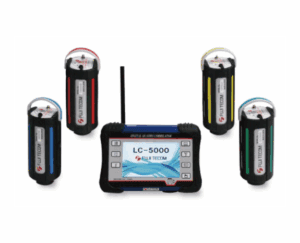
In some piping systems, inspecting a single point may not provide enough information to locate a leak accurately. Fujitecom LC-5000 uses leak noise correlation to compare sound signals collected from multiple points along a piping system and help determine the leak location.
The LC-5000 can perform correlation measurements on up to six routes simultaneously using six pre-amplifiers. It also includes GPS functionality to obtain positional information for sensor installation points. This method allows operators to analyze data from several measurement points and narrow down the suspected leak location more effectively.
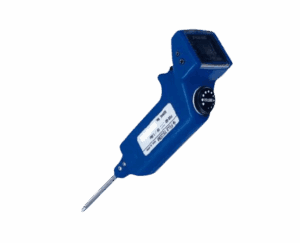
Fujitecom FSB-8D is a digital sound detector suited for leak detection work on PVC and PE pipes. The device allows operators to view sound levels numerically on the LCD while also listening to the sound through headphones. This combination helps operators assess both sound intensity and sound characteristics during inspection.
The FSB-8D also features a notch filter to help reduce unwanted noise. Its short contact rod with an anti-slip finish provides stable contact when listening for leak sounds at specific points. Because the FSB-8D is intended for use on PVC and PE piping, pipe material is an important factor when selecting this type of leak detection equipment.
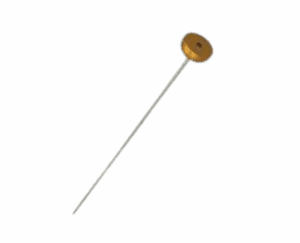
Fujitecom LSP is an acoustic listening instrument used for point checks, house connections, and valve surveys. The device helps operators listen to sounds transmitted through the piping system from specific contact points.
The LSP uses an amplification structure known as the FUJI Floating System inside its resonant chamber. This system helps amplify leak noise and can be used on both metallic and plastic pipelines. The LSP can be used for initial inspections at specific points before the leak detection process continues with other equipment or methods when required.
The appropriate water leak detection equipment depends on the type of inspection and the condition of the piping system.
Using a water leak detector makes the leak investigation process more targeted. Operators do not have to rely only on visible signs such as puddles, damp surfaces, or wet areas. Sound, vibration, and inspection data can help narrow down the area that requires further investigation.
This is particularly important for underground piping systems because the actual damaged section of pipe may not be located directly beneath the point where water becomes visible at the surface.
Using suitable equipment also allows the inspection method to match the characteristics of the piping system. PVC and PE pipes, noisy environments, and systems that require measurements from several points may each require a different approach.
With more focused inspection data, operators can identify which areas should be investigated further before repair work begins.
The right water leak detector should be selected based on the condition of the piping system and the objective of the inspection. For point checks, valve surveys, and house connections, Fujitecom LSP can be used as an acoustic listening instrument. For leak detection work on PVC and PE pipes, the FSB-8D is designed for this type of application.
If the main requirement is to listen for leak sounds and help identify a leak point, the LDR-20 can be considered. In areas with high background noise, the DNR-18 is more suitable because it is equipped with a Noise Reduction System. For inspections that require sound analysis from multiple measurement points, the LC-5000 can be used with the leak noise correlation method.
Before selecting equipment, several factors should be considered, including:
Understanding these conditions from the beginning helps ensure that the selected device is better suited to the actual requirements in the field.
Water leak detection helps make leak investigation in piping systems more targeted, especially when the damaged section cannot be identified visually. Different methods may be used, including acoustic listening, digital sound detection, noise reduction, and leak noise correlation, depending on the piping system and inspection requirements.
Fujitecom offers several options, including LSP, FSB-8D, DNR-18, LDR-20, and LC-5000. Choosing the right device should be based on the pipe material, site conditions, and inspection method to support a more accurate leak detection process.
Need help choosing the right water leak detector? Contact us via WhatsApp for consultation and Fujitecom product recommendations based on your piping system conditions and application requirements.
FM-200 Fire Suppression System: Functions, How It Works, and Components
The FM-200 Fire Suppression System is a clean agent solution used to protect electronic equipment and high-value assets. In server rooms, communication centers, or control rooms, choosing the right extinguishing agent is important because particles and oily deposits can increase cleanup requirements and interfere with the protected equipment. This system uses a gaseous clean agent […]
See Details
Fire Alarm Systems: Functions, Components, Types, and How They Work
A fire alarm system is an essential part of building safety because it helps detect early signs of fire and alerts occupants before the situation becomes more dangerous. Smoke or a rise in temperature may appear before flames are visible, allowing occupants and emergency personnel to respond more quickly. A fire alarm is not simply […]
See Details
Pressure Tanks: A Reliable Solution for Stable Water Pressure and Longer Pump Life
Fluctuating water pressure is often seen as a minor issue. In reality, it can force pumps to work harder, increase energy consumption, and accelerate wear on the entire piping system. One of the key components that helps maintain stable system performance is a pressure tank. A pressure tank acts as a pressure-balancing device within a […]
See DetailsNeed the right engineering solution for your project? Our expert team is ready to provide insights and the best recommendations. Send us your questions, and we’ll get back to you soon.


