
In modern water systems, pumps are one of the most vital components for buildings, utilities, and industrial applications. Among the many options available, centrifugal pumps and submersible pumps are the most commonly used.
The difference between centrifugal pumps and submersible pumps lies in their installation position, working principles, and application types. Although both function to transfer fluids, they are designed with different technical characteristics to suit specific water system requirements.
In general, in water distribution systems, pumps serve to:
Transfer water from one point to another
Maintain stable flow pressure
Support operational processes such as cooling, sanitation, and drainage
For this reason, selecting the right type of pump directly impacts energy efficiency, system reliability, and equipment lifespan. Therefore, understanding the difference between centrifugal pumps and submersible pumps is an important first step.
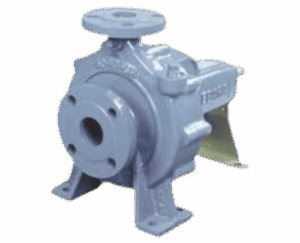
Basically, a centrifugal pump operates by utilizing centrifugal force generated by a rotating impeller. Fluid enters through the suction inlet, is accelerated by the impeller, and then discharged at a higher pressure.
In most applications, this pump operates outside the fluid and supports clean water and circulation systems.
First, the motor rotates the impeller
Water enters the center of the impeller (eye)
Centrifugal force pushes the water toward the outer edge of the impeller
Pressure increases and water exits through the discharge pipe
For example, EBARA FSA operates as an end suction volute pump for building and light-to-medium industrial applications.
Building water supply systems
HVAC and air conditioning systems
Sprinkler and fire support systems
Swimming pools
General industrial applications
For this reason, this pump works best when the water source is above ground and requires stable pressurized distribution.
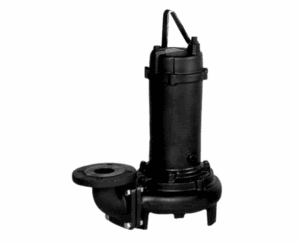
In contrast, a submersible pump operates while fully submerged in fluid. The motor and pump are enclosed in a sealed unit, making it safe for underwater operation.
As a result, this type of pump commonly supports drainage, wastewater, sump pits, and dirty water applications.
For example, EBARA DL operates as a submersible sump pump for drainage and wastewater applications.
Based on the official brochure:
Non-clog semi-open impeller design
Prevents blockage caused by fibrous materials
Double mechanical seals with oil lubrication
Motor equipped with thermal overload protection
Stainless steel fasteners
Suitable for sewage and wastewater applications
Building and basement drainage
Domestic and industrial wastewater
Sump pits
Sewage systems
As a result, this pump operates reliably while submerged and handles fluids containing solid particles.
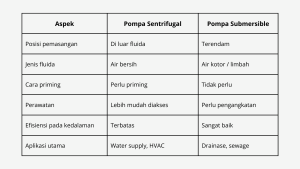
Overall, the main differences between the two pump types are summarized as follows:
Simple design and easy maintenance
Suitable for clean water systems
Relatively lower installation cost
Easily integrated with building piping systems
Not suitable for dirty or wastewater
Limited suction depth performance
Requires initial priming
No priming required
Effective for submerged applications
Suitable for fluids containing solids
Space-saving installation
Maintenance requires pump lifting
Operates in harsher environments
Higher initial investment cost
In practice, different applications require different pump types.
Centrifugal pumps such as EBARA FSA are more suitable for:
Clean water distribution
HVAC systems
Sprinkler and building utilities
On the other hand, submersible pumps such as EBARA DL are more ideal for:
Basement drainage
Domestic wastewater
Dirty water and sewage systems
For this reason, pump selection should consider fluid type, water source depth, and operating conditions.
Before making a final decision, consider the following:
Type of fluid (clean water or wastewater)
Required capacity and pressure
Installation location
Ease of maintenance
Compliance with technical specifications
Therefore, technical consultation helps ensure optimal and long-term pump performance.
The difference between centrifugal pumps and submersible pumps lies in their working principles, installation positions, and applications. Centrifugal pumps excel in clean water systems and pressure distribution, while submersible pumps are designed for submerged conditions and fluids containing solids.
In conclusion, by understanding the characteristics of each pump type, users can accurately select pumps such as EBARA FSA or EBARA DL to meet the specific needs of building and industrial systems.
Our team is ready to help provide technical solutions tailored to your project requirements. Feel free to contact us for a consultation.
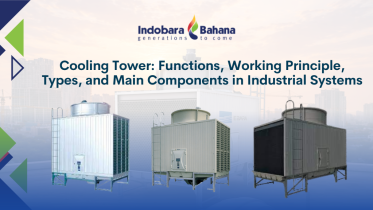
Cooling Tower: Function, Working Principle, Types, and Key Components in Industrial Systems
In many industrial systems, one of the most common issues is actually quite simple: unstable temperature. Cooling water that is supposed to support system performance can gradually become too hot, increasing the workload of equipment and reducing overall efficiency. If this condition is left unmanaged, it can lead to more serious problems. Not only does […]
See Details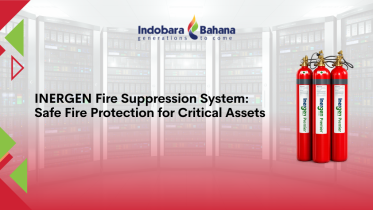
INERGEN Fire Suppression System: Safe Fire Protection for Critical Assets
What Is an INERGEN Fire Suppression System? In industrial environments, fire incidents are not just about flames. The impact can be far more severe ranging from equipment damage and data loss to complete operational shutdowns. The challenge is that not all fire suppression systems are truly “safe.” Some may successfully extinguish fires but end up […]
See Details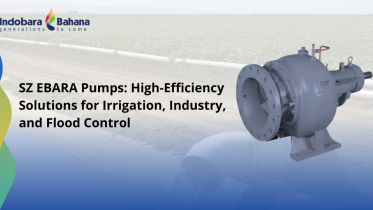
EBARA SZ Pump: High-Efficiency Solution for Irrigation, Industry, and Flood Control
What Is the EBARA SZ Pump? The EBARA SZ Pump is a horizontal shaft mixed-flow volute pump. It combines axial and radial flow characteristics to deliver high discharge capacity with stable pressure. With efficiency levels reaching up to 80%, this pump is ideal for large-scale water transfer such as irrigation, drainage, and clean water installations. […]
See DetailsNeed the right engineering solution for your project? Our expert team is ready to provide insights and the best recommendations. Send us your questions, and we’ll get back to you soon.


